
Structured page extraction
Product pages, listings, directories, profiles, tables. Pulled into the exact schema you provide, field by field.
Competitor prices, stock levels, OEM-vs-aftermarket matches, and MAP compliance checked by a human analyst to 99.5% accuracy and delivered to your systems. Stop pricing against bad data.







The reframe
If you distribute or sell auto parts, you're setting prices on thousands of SKUs across brands, tiers, and channels — and the ground moves daily. Most teams still track it in spreadsheets and browser tabs. That means you only see what you happened to check, when you checked it.
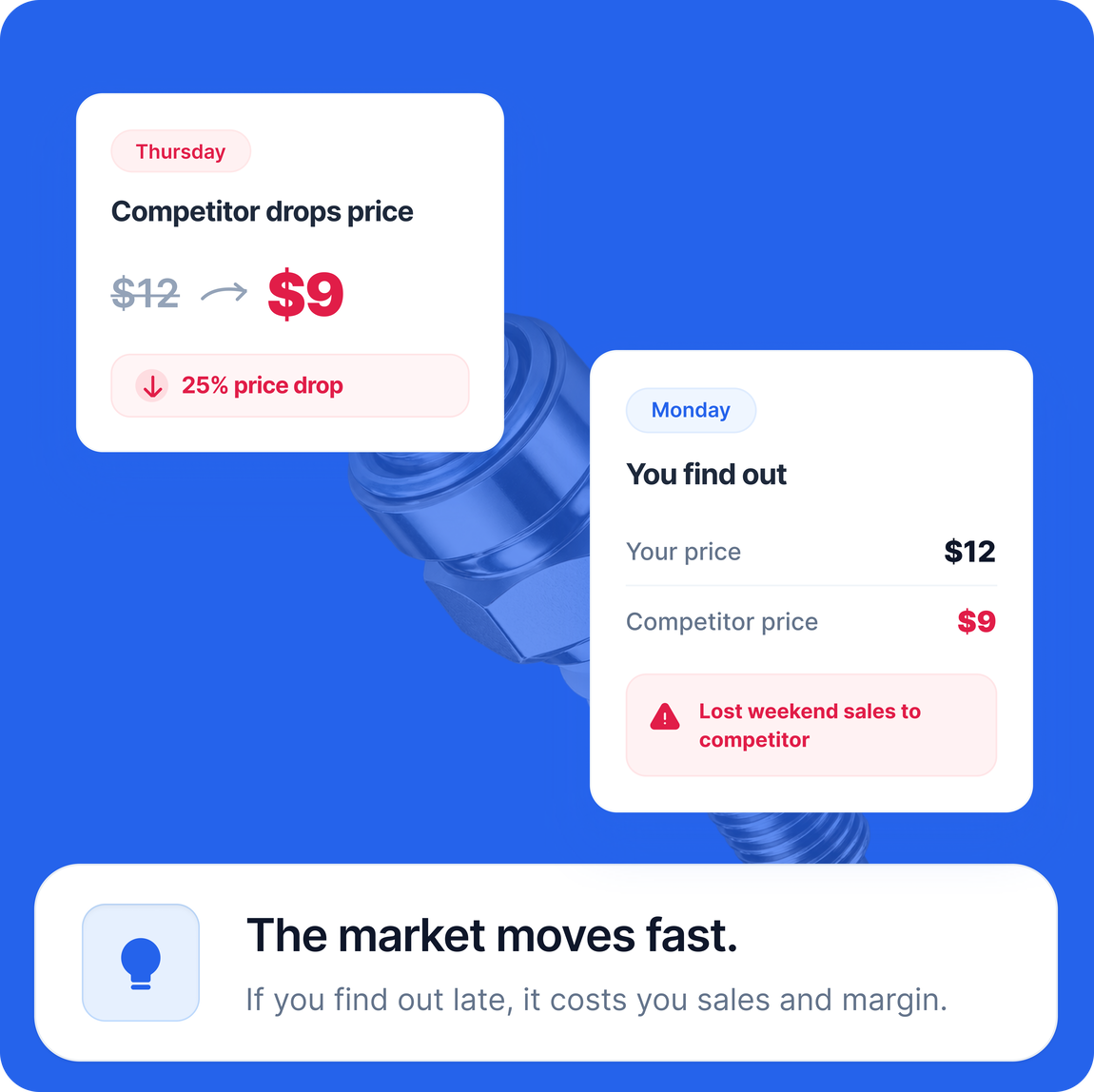
A competitor drops a popular filter Thursday night; you find out Monday, after losing the weekend. A "ghost" listing shows a rock-bottom price on a part that's actually out of stock, and you cut margin to chase it. A superseded part number silently breaks a comparison. An unauthorized reseller undercuts your MAP and nobody catches it by hand fast enough to matter.
That's the difference between checking a few prices and running pricing intelligence. Crawlify watches the whole catalog, not the twenty SKUs your team has time for, and correlates price with stock, brand tier, and match so a competitor's low price on something they've sold out of never reads as a threat. Coverage, not cadence, is what makes the signal trustworthy.
Definition
Auto parts pricing intelligence is the continuous, verified tracking of competitor prices, stock levels, and product matches across every marketplace and channel where parts sell — correlated into signals a distributor can act on, not just a pile of raw numbers. It differs from a pricing dashboard or a scraping tool, which stop at raw extraction and leave verification, ghost-listing detection, and OEM-to-aftermarket matching to you.
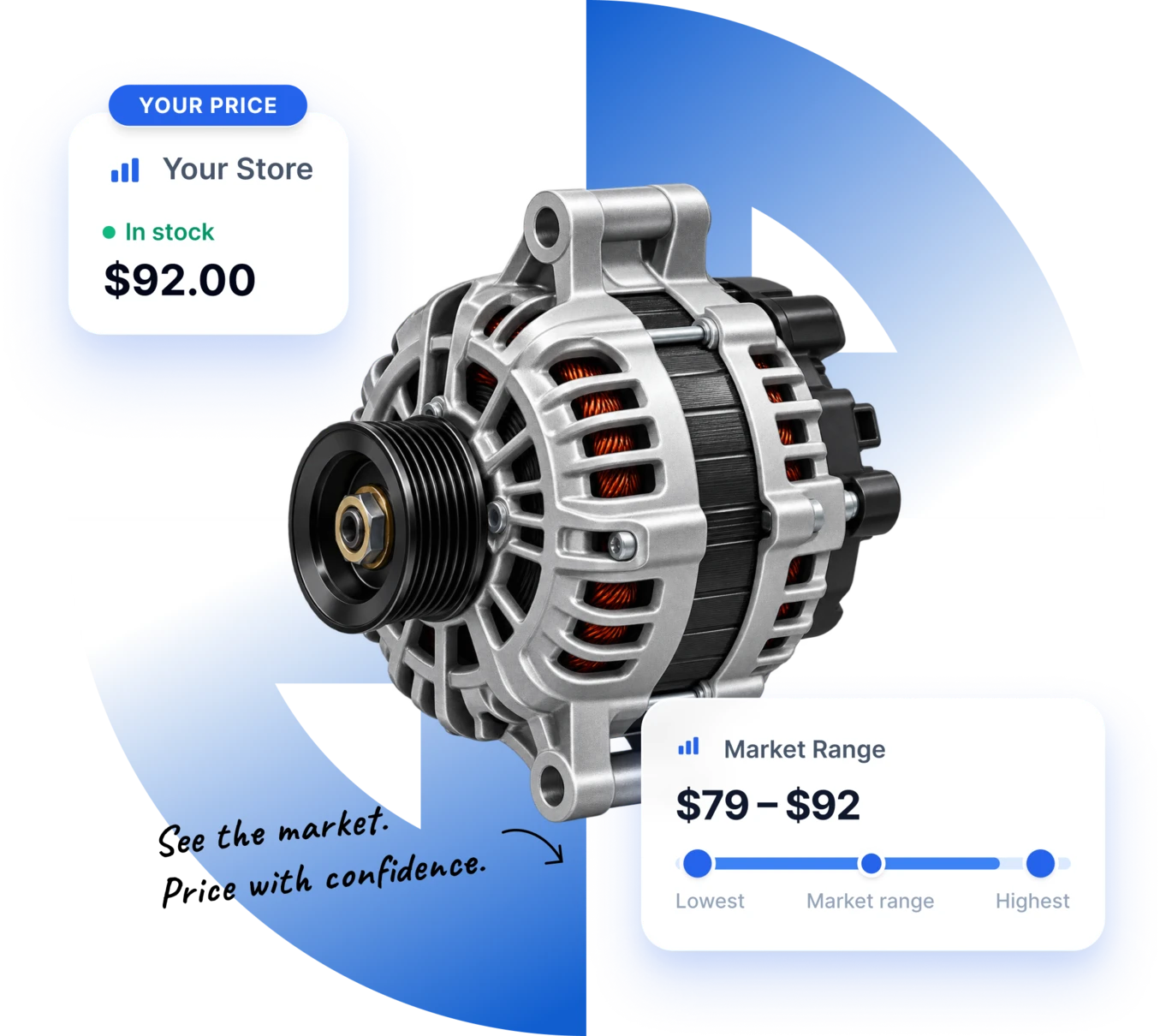
We match the same part across competitors and analyze real-time prices, availability and trends.
Alternator
$82 – $142
Spark Plug
$4 – $12
Brake Pads
$18 – $32
Air Filter
$8 – $19
We match the same part across competitors and analyze real-time prices, availability and trends.


Amazon reduced the price of Brake Pads by 14%
Previous Price
$21
New Price
$18
Capability
Monitoring is configured per source — what counts as a change, how often we look, and what's worth surfacing to you.
Product pages, listings, directories, profiles, tables. Pulled into the exact schema you provide, field by field.
Discover and traverse a site's structure, follow pagination and internal links, and extract at depth, not just the landing page.
Content that loads client-side, behind interactions, or through infinite scroll, handled properly rather than skipped.

Sites that defend against extraction, handled with respectful request rates and compliant technique, not brute force.
PDFs, filings, and mixed-format pages parsed into clean structured output.
Re-crawl on your cadence, catching only what's new or changed since the last run, so you're never re-processing the whole site.
How It Works

Your SKUs or part numbers, the competitors and marketplaces that matter — Amazon, eBay Motors, RockAuto, AutoZone, O'Reilly, NAPA, Advance Auto, CarParts.com, 1A Auto, wholesale portals — and how often.
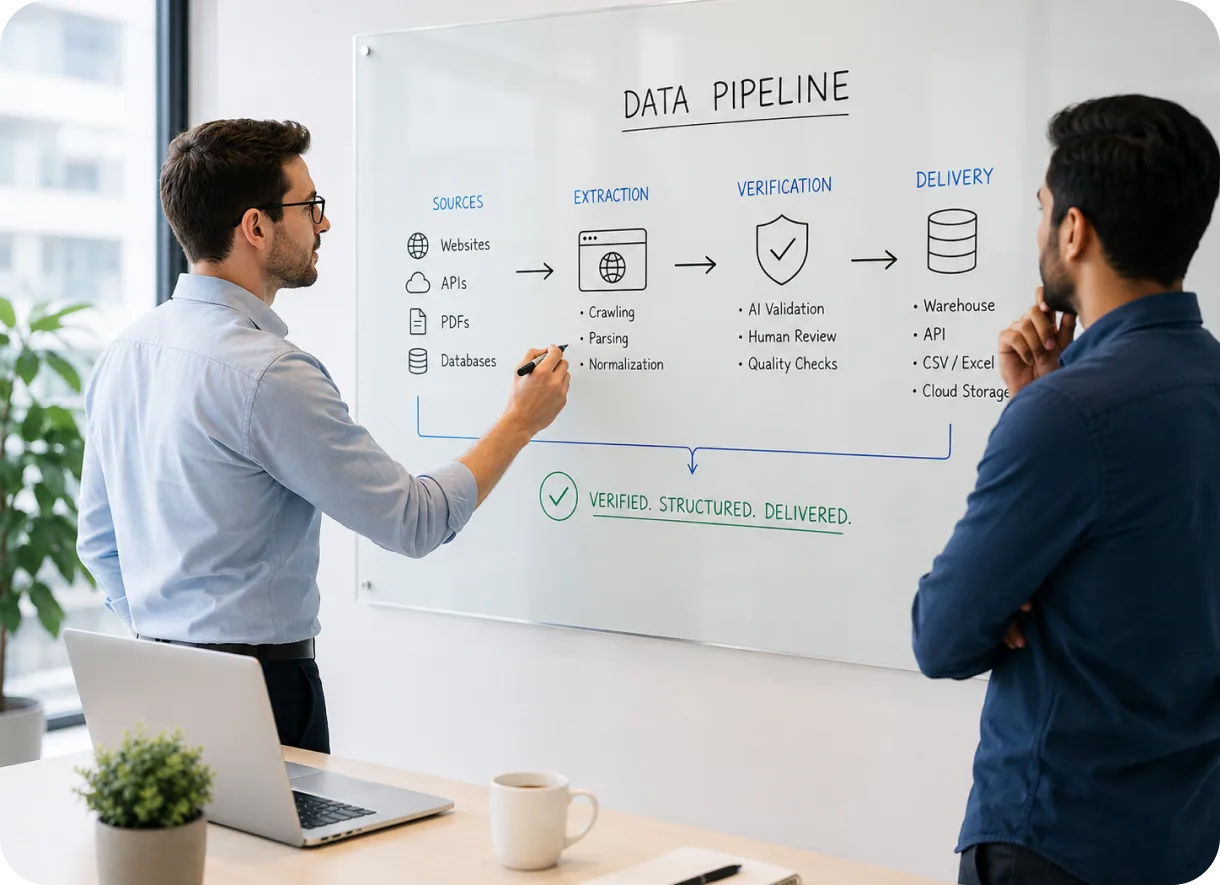
Our AI gathers prices, stock, and product details and matches parts across sources by part number and fitment, including OEM ↔ aftermarket equivalents and superseded numbers.
Analysts confirm accuracy to 99.5% at the field level and attach a verifier ID and timestamp. Ghost listings and anomalies get flagged.
Clean, correlated data in your format, on your schedule — spreadsheet, warehouse, ERP, or BI tool — traceable end to end.
Case Study
Scanning Lasfit's full live catalog against AUXITO and Alla Lighting surfaced 41 matches across 26 products, every one scored 90–95% on a documented 5-attribute rubric.
www.lasfit.com
Read Full Case Study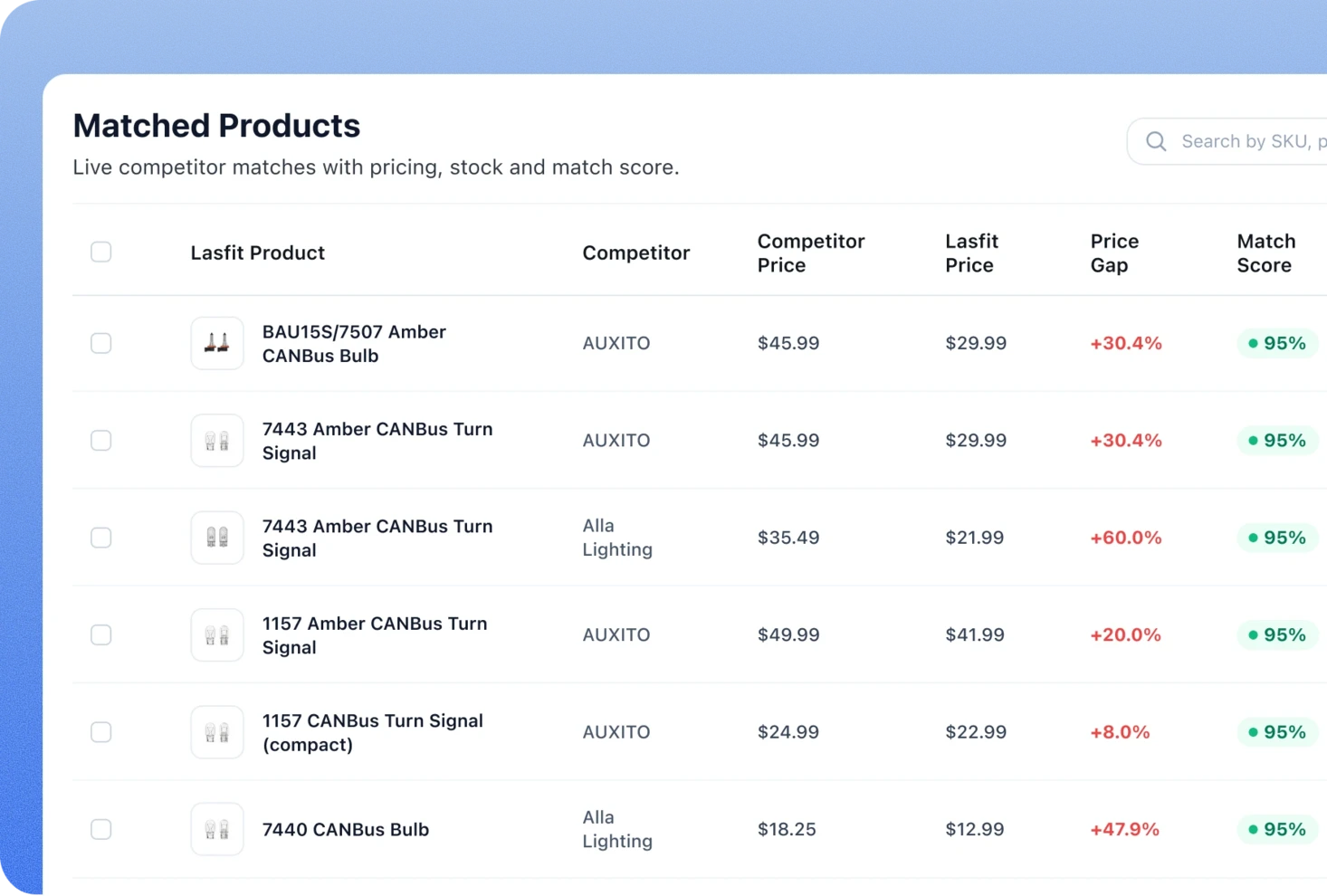
Manual vs Managed
| Stage | A scraping tool or in-house scriptStops at extraction. Everything after it is yours to run. | Crawlify, managedVerified, correlated, and delivered — the whole catalog, not a sample of it. |
|---|---|---|
| Is the price or stock actually correct? | Only what you checked, when you checked it. | Human-verified to 99.5%, verifier ID and timestamp on every record. |
| Catches out-of-stock ghost listings | No. | Yes — flagged so you don't price against phantom stock. |
| OEM vs aftermarket, brand-tier context | Manual guesswork. | Verified matching, with brand-tier and stock context in one signal. |
| MAP violations with proof for enforcement | Screenshots by hand, if anyone remembers. | Alerts plus audit-trailed evidence — who advertised what, and when. |
| Where the data lands | Your spreadsheet. | Your stack — sheet, warehouse, ERP, BI, in your format. |
| Time to first data | Ongoing forever. | 30-day pilot. |
Who this is for

It's the practice of continuously collecting and verifying competitor prices, stock levels, and product matches for automotive parts, then turning them into decisions — what to reprice, hold, or flag. Unlike a one-off price check, it's systematic and current across every channel where parts sell.

See verified parts pricing on your own SKUs
Send us your part numbers and the competitors that matter. In 30 days you'll have verified, decision-ready pricing signals in your systems — for $2,500. No new software to learn.
Become a data partner
Working with us on a vertical where verified pricing becomes a shared dataset? That's the data-partner track.